


Can a person truly change who they are — not just their looks, location, or outlook but their identity?
The answer is yes.
But the process is not always dramatic, smooth, or instant. It doesn’t happen because of some mind-shifting conversation, religious conversion, or profound encounter. Rather, it starts with confronting yourself.
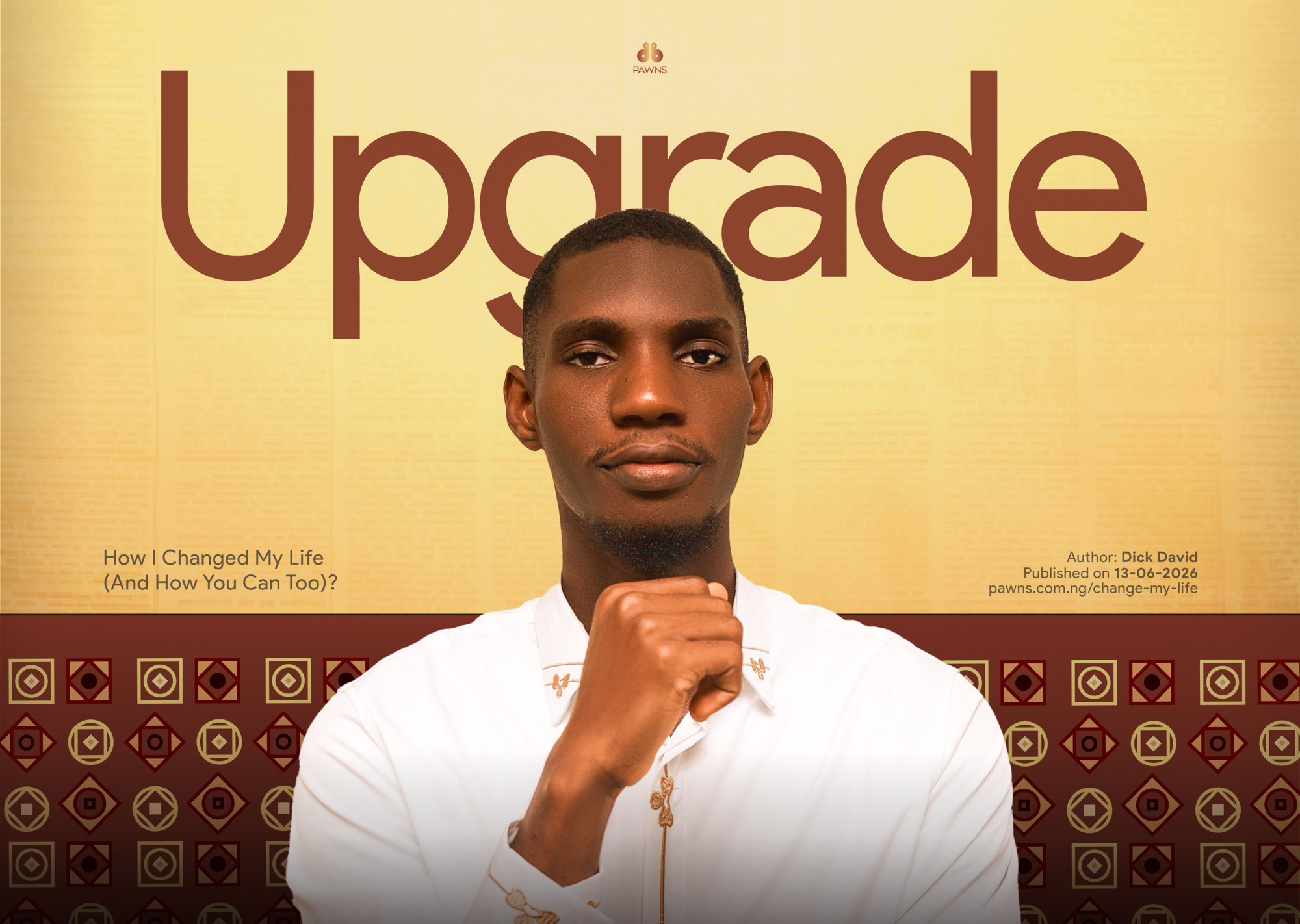
Below is the story of how I had that confrontation and how it changed my life. Hopefully, after reading, you will see how you can change your life too.
Note: This is an excerpt from Game On, a free ebook by Pawns.
Why Do I Feel Like Such a Screw-Up?
2014. 12 years ago, like many teenagers, I had a lot of things I desired: the latest PlayStation, a hot girlfriend, luxury clothes, a lot of money, and so on.
But I never got any of that. Rather, I felt like a screw-up.
I was 17 when I got into the university. I was insular, drowning in social anxiety, and 100% dependent on my parents, with zero marketable skills.
I didn’t feel at all in control of my life, nor did I have any idea where I was headed. In fact, my course of study — computer engineering — was suggested by my family, who thought it was appropriate considering I had the brains and enjoyed science fiction movies, cartoons, and content.
At the university, there were many people living life the opposite of what I was experiencing: They were well-dressed, used exotic phones, had romantic partners, were independent, and seemed to know where they were headed in life.
For the longest time, I chose to ignore the fact that I was not getting what I wanted out of life. And for the longest time, nothing changed.
I often distracted myself with academic books, social media, and computer games. But in those moments when I wasn’t stimulating my mind, I mostly felt empty, anxious, and occasionally like a complete loser. I wrestled with the thoughts in my head, reminding me that girls didn’t want me, I didn’t know how to make money, and I was not living life to the fullest.
I countered with arguments like, “I am here to graduate with a good CGPA, not chase girls”, “My parents provide all I need, so I need not worry about money”, “If I graduate, I will figure it all out”, “All is going to be fine”, “I will be fine”… On and on I kept telling myself.
For three years, these thoughts wrestled, morphed, and reverberated in my mind. For three years, I lacked everything I desired.
What I was unconsciously doing (or experiencing) was cognitive avoidance — the habitual suppression of uncomfortable truths through distraction and rationalisation. And, as long as I kept doing that – avoiding the confrontation, avoiding looking into the mirror – nothing changed.
How Do I Completely Change My Life?
Most people don’t change until they run out of distractions. And, sometimes, that distraction can come in the form of inspirational clips on their timelines – which, ironically, tells them they can change, or worse, are perfect the way they are.
For most people, the change begins when they can no longer avoid the truth — when all the distractions get boring or even annoying – when the gentle voice at the back of their minds gets so loud they have no other option than to listen.
And, that is exactly what happened to me.
2018, and I was now 21.
It was my industrial training (IT) year: All engineering students had to find a place for their six-month Industrial Training (IT), so almost everyone left campus. But I didn’t.
I found a place close to school, so I stayed back at my lodge. As a result, I found myself all alone for the first time in my entire life.
There were no more distractions — no one to gist or play video games with. There were no lectures to attend, nor tests and exams to prepare for. I only had to go to my IT place about 2 to 3 times a week, and that was just from 9 a.m. to noon in most cases.
At first, I tried the usual: binge-watching movies, doom-scrolling on social media, and blasting music all day. But it was not enough. I got bored, tired, and at other times, the power just went out.
In the silent moments, I was forced to (re)consider the incessantly nagging voices in my head: The pesky voices whispering how much I didn’t have, how much of a loser I was, and how much I was not enough.
Social media became distasteful, with influencers either calling me broke and single or posting pictures and videos of them living the life I craved, all day.
But the most haunting of all was when my imagination took hold. The worst being the thought, “What if my parents died?”…
That was a critical point because I moved from feeling to thinking. I started thinking of myself outside of my head.
You see, most people who think they are being introspective are actually just cycling through their feelings. They don’t really interrogate the core issue underneath. To change, you must go past the feelings.
And, for me, when I could no longer silence the voices and went deeper down the feeling of loneliness or sadness, I was finally able to see that the problem wasn’t really what I didn’t have. It was who I was — or more correctly, who I was not.
I wasn’t experiencing the life I day-dreamed of because I hadn’t become the person who makes it their reality.
The Truth That Will Change My Life
The truth that changed my life, and that can change your life, is that “You are both the problem and the solution”.
When I realised that the issue was not necessarily my parents, the economy, or the other gender – because then, everyone else should be sharing my reality – that started to shift things.
I started to actually think of how to improve myself: How to be the person who could get the things I wanted — the person who can make money, get a girlfriend, and live life to the fullest.
I started Googling, and eventually seeking and consuming self-help content — blogs, videos, books, you name it. Thankfully, I found a lot of helpful resources out there.
Some notable books gave me real mental breakthroughs:
- How To Win Friends and Influence People by Dale Carnegie — which gave me insight into making friends.
- Rich Dad Poor Dad by Robert Kiyosaki — which gave me a rule of thumb on how to approach wealth acquisition.
- Models by Mark Manson — which explained how I could get ladies in my life while remaining authentic. And, perhaps most importantly:
- The Subtle Art of Not Giving a F*ck by Mark Manson — which taught me how to be more intentional about what I care about and give my attention to.
The more I read books and consumed helpful content online, the less anxious I felt, and the less self-critical those internal voices became.
Like scattered tributaries finally joining a river, all my conflicting thoughts merged into one current: Be better.
It became my mission to grow up, level up, and step up.
Rather than ignoring my problem or self-loathing, I became my own biggest fan and encourager.
I stopped thinking of myself as a loser or a screw-up, but rather a Pawn.
“People who become great at something become great because they understand that they’re not already great — they are mediocre, they are average — and that they could be so much better.” — Mark Manson
Note: The psychological term for this shift is self-efficacy — the belief that your actions can produce meaningful outcomes. Stanford psychologist Albert Bandura, whose foundational research on the concept remains among the most cited in the field, identified it as one of the strongest predictors of whether a person persists through difficulty or collapses under it.
How Do You Get From Where You Are to Where You Want to Be?
Change is a process.
You have to study, then act.
And, you have to do it repeatedly, with increasing stakes.
Most people skip one of the two — they study endlessly and never move, or they act blindly and never learn. Change happens when you can learn from your actions. Doing that consistently is essentially what moves you from who you are to who you want to be.
Step 1: Build the Mental Models You’re Missing
As I mentioned, studying was my initial step in personal development.
The books gave me new mental models — frameworks through which I was able to better understand myself, other people, and the world at large. It made me realise what was possible, and how to approach things.
Before developing that habit of reading, all I knew and did were largely based on ideas I had inherited from family, neighbours, church, and school. And, none of them really could meet me where I was.
But, books did exactly that.
It is like Alan Bennett once said, “The best moments in reading are when you come across something – a thought, a feeling, a way of looking at things – which you had thought special and particular to you. Now here it is, set down by someone else, a person you have never met, someone even who is long dead. And it is as if a hand has come out and taken yours.”
The books were able to guide me, exactly because, within them, the author shared their journey and steps taken, and that clarity is what mitigates the fear and confusion, and gives you the courage to move forward.
Step 2: Act Before You Feel Ready
After the epiphanies from reading books, I decided to reach out to a friend, whom I knew was making money selling honey in school. I told her I would love to start making my own money. And she was like, “How about I give you some bottles of honey for free and you go sell them. Then, you’d take a percentage of the profit.”
I grabbed the “honey” offer.
I stacked the honey bottles into a nice bag. Dressed up in my best outfit. Wore a decent amount of perfume — perhaps a bit excessive.
“1, 2, ready, go!”
I opened my door and hopped out.
Lodge to lodge.
Room to room.
Knocking on doors.
And when they asked, “Who are you?” or “Who are you looking for?”, I replied, “I am Dick David. I sell honey”, pulling a bottle from the bag.
Some bought. Most didn’t. But at the end of the day, I sold all the honey I had.
It was just a numbers game. And I got better at it with practice.
My friend was impressed. She gave me more bottles. I did it all over again. And then again, and again. And again.
The experience helped me make a little money for myself. But even more importantly, it taught me how to push through my social anxiety — rather than being crippled by fear of what others might think — to get what I want.
The little successes were all I needed to convince myself beyond doubt that I was full of potential.
But the journey was only beginning.
One day, while still selling the honey, I met a guy. He invited me into his room after I knocked and explained myself at the door as usual.
Inside his room, I saw some artworks on the wall and another on his table. The piece on his table was unfinished. And, because I used to enjoy drawing as a kid, I leaned into that natural interest, and I asked him about the artworks.
Figuring he was an artist, I pushed to ask if he could teach me. He agreed.
So, I got myself a sketchbook and some graphite pencils with the little money I had made from selling the honey — just like you upgrade a video game character using game points.
With his guidance and a few months of practice, I started making decent art people were willing to pay for.
During that time, I also explored painting houses, drop servicing, selling bedsheets, addressing lecture halls filled to capacity, talking to interesting ladies I saw on my way, and more.
The point was, the more I dared to act despite the fear and discomfort, the more I felt confident in myself and my abilities.
“You build confidence when you do the hard and succeed at it.” — Sherry Yongoikyo Ngueren
It felt exhilarating — think of the joy of getting a Pawn to the other side of the board and promoting it to a Queen, but now in real life.
And so, I decided to start bearing the nickname “The Pawn”, because I intend to keep getting better in different aspects of my life.
And because many of the books and articles I read online about being a better version of myself suggested writing things down, I decided to start journaling, and soon, blogging (also naming the blog “Pawns” — www.pawns.com.ng).
The blog became an avenue for me to share my experience, and how I was/am growing up, levelling up, and stepping up. Today it has become an avenue for everyone interested in sharing their ideas, stories, and experiences to help others become better too.
Conclusion: Change Begins When You Face The Pain
All these started from not denying my pain, but facing it.
My life started to change when I accepted I was both the problem and the solution, and then demanded more from myself.
Because when you open your mouth or heart and ask something of life, it doesn’t hand you that thing directly. Instead, it gives you an opportunity that puts you under pressure — to squeeze out what you asked for from within you.
“How long are you going to wait before you demand the best for yourself?” – Epictetus
P.S: This blog post you just read is one section of Game On, our free ebook. The full book has chapters and ideas that we won’t publish on this blog. If you want to read them, then go to: pawns.com.ng/newsletter. Input your email, hit Subscribe, and it arrives in your inbox instantly. It’s also 100% free.


Dick David is a freelance SEO content writer and editor with over 7 years of experience in content writing, digital marketing, and sales. He is the founder of Pawns Digital Agency. Throughout his career, he has authored over 4 books, published hundreds of SEO articles attracting thousands of monthly visitors, ghostwritten numerous works, and edited hundreds of content pieces across various industries. Currently, he works with Robert Taylor Media and has also worked with Tobi Digitals and Branditechture Design Agency, among others.