
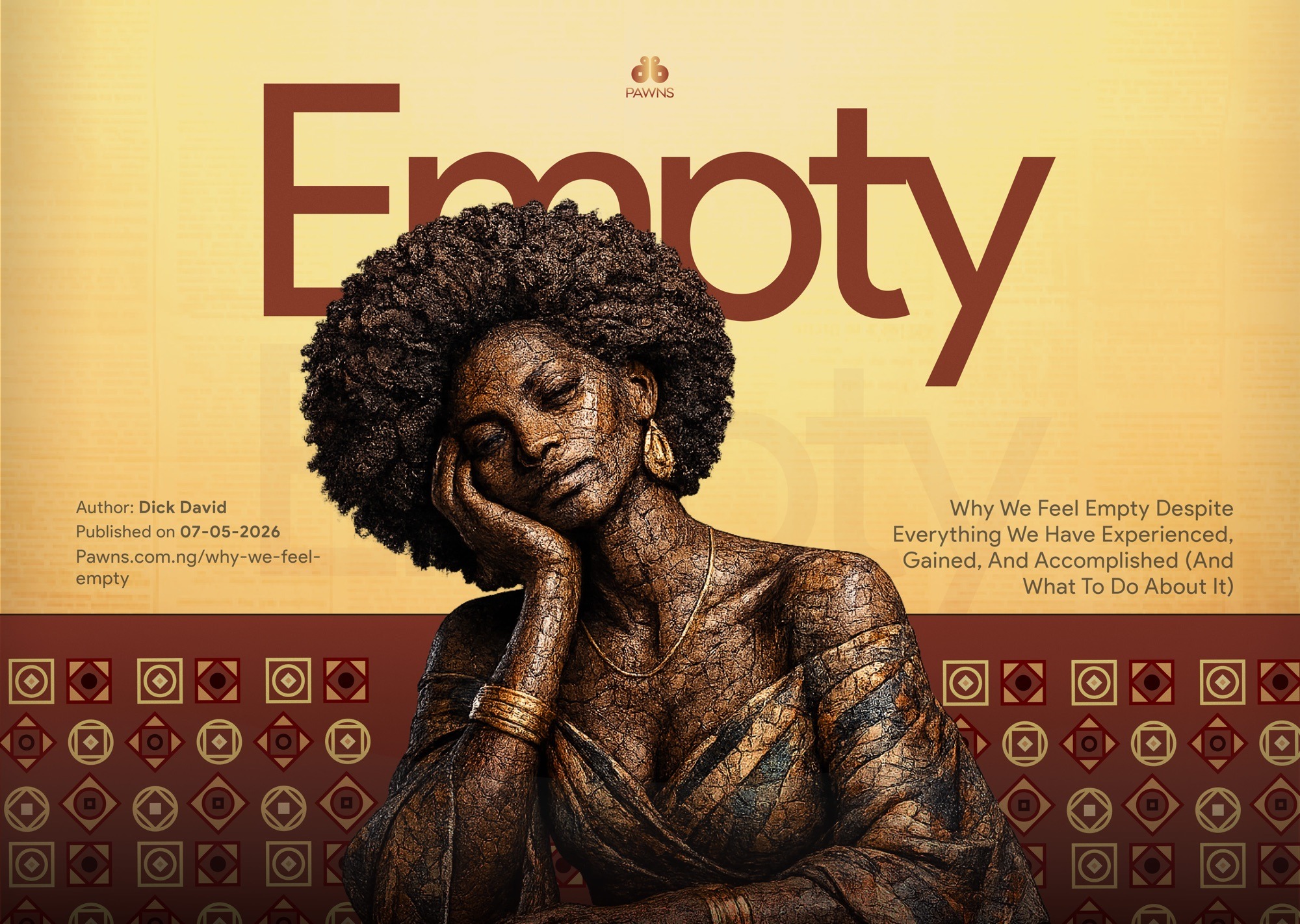


Most people look at “successful people” and assume they would be happier and satisfied if they too were “successful” at whatever the “successful people” were “successful” at. But for many people, the more successful they get, the more angst they feel.
Why?
Because one thing success does is reveal the possibility of more success.
So, if happiness and satisfaction are tied to being successful, then succeeding only reveals more ways one has been unsuccessful. It becomes a vicious circle that traps many on the treadmill of chasing the next success.
Does this mean you should not aspire to be successful?
Why Does Success Stop Feeling Good After a While?
Success, by definition, is a lofty milestone attained.
But the thing about milestones is that they aren’t the end.
No one completes a 100-meter race and sits at the finish line forever.
Each success eventually has to be surpassed as you move forward with life.
And as you move forward, that initial hit of happiness is sure to fade into the background.
Sadly, for many people, success is not half as happiness-inducing as they had imagined.
Why?
Because true happiness comes from what you actually value. And many people are not aware of what they truly value.
It seems counterintuitive—we might wonder, why would someone chase what they don’t value? Doesn’t the chase indicate that they value the thing?
Consider this example: I have always been a “brilliant student”. I was always amongst the top 5 in class, and many times came out the second best. There were a lot of claps, handshakes, and occasional gifts. But I was never the type to drool over those. In fact, I felt some anxiety about being acknowledged as one of the best students. So, why did I study hard? Partly because my parents valued it, and partly because it stroked my ego. It would continue until my university days, where I would be maintaining a good CGPA, even when I didn’t care much about the course of study. And, although I didn’t drop out of school, I eventually pivoted to a career path I cared about—which is why you are reading this piece (I have written).
Many people never get over the treadmill of chasing success they don’t care about. They go on to get a prestigious job they hate, marry a person they don’t care about, give birth to one too many children than they wish, and so on. They look at what society labels “valuable”—whether indicated by price tags or the sheer number of people who support them.
What many don’t consider is that what you consider valuable is largely subjective – it is just about what people think. While this adds real market value and stakes to things, it does not necessarily translate to the heart. If your heart is not there, perhaps you should get down that treadmill.
But this seems inconceivable to many, and as a result, they live lives that feel empty—even if those same lives might look impressive, filled with accomplishments, and glamorous.
Indeed, research into hedonic adaptation reveals that the pleasure derived from material purchases (like that wig or new gadget) and external status markers (like that PhD or branded shirt) often fades quickly.
That aside, even the things that happen to you don’t even determine much in the long run—life going smoothly, without crises, does not even mean you’d be happy, nor does a life full of challenges mean you’d be unhappy. For instance, studies have found that lottery winners and accident victims show similar long-term levels of happiness—that is, the thrill of winning or the trauma of loss both faded back to the individuals’ baseline of happiness after a while.
This is also why a promotion feels significant for weeks, maybe months, but eventually, people are back to whining about the job. Or why that broken screen, or heck, even an amputated limb, stops being a source of constant complaint given time. This is hedonic adaptation. And, it does not mean you should not buy and experience nice stuff; it just reveals that the happiness you seek is more internal than you think.
As Naval Ravikant once said, “If you can’t be happy with a coffee, you won’t be happy with a yacht.”
You Have The Options To Live A Life That Satisfies and Brings You Happiness
“It never ceases to amaze me: you all love ourselves more than other people, but care more about their opinion than our own.” – Marcus Aurelius
If there is one thing that is guaranteed to alienate you from happiness and satisfaction, it is being alien to what you genuinely find valuable – and instead relying on what society calls important.
Indeed, the qualifications, fashion trends, charting music, fine delicacy, popular culture, popular pastimes, and things generally considered “very important” are all intersubjective, and if they don’t align with you, they won’t mean much to you have them in abundance. Research around the self-determination theory shows that external rewards actually undermine long-term motivation if they ignore or go against your internal desire.
People who realise this—people who don’t want to invest the next decade or more chasing what society says is nice, rewarding, or impressive, but listen to themselves—and make the shift often become:
- Respected experts from years of obsession with their passion.
- Distinctive in style, much like any iconic celebrity.
- Listeners of music that may exist outside the mainstream.
- Attuned to their bodies, eating what they need rather than just what is abundant.
- Engaged with niche and unconventional cultures.
- Devoted to hobbies that others might consider weird or boring.
- Deliberate in their priorities, without ignoring the objective realities such as their biological and evolutionary needs.
And so on.
This deep absorption in a personally chosen life produces long-term satisfaction. But, even more importantly, helps you build what is really valuable to society.
Like John Collison once said, “As you become an adult, you realise that things around you weren’t just always there; people made them happen. But only recently have I started to internalise how much tenacity everything requires. That hotel, that park, that railway. The world is a museum of passion projects.”
And, I think that is true. Because if it were really about power, money, fame, or ease, Chimamanda should have ventured into politics rather than writing intricate books that explore difficult topics. Tems should have ventured into OnlyFans rather than making yet another outstanding music. And Ngozi Okonjo-Iweala should have stayed comfortably in her high-paying Washington D.C. World Bank Managing Director role, rather than taking a ~70% pay cut to tackle Nigeria’s complex financial challenges as Minister of Finance.
You don’t have to be a Millionaire or a celebrity for your life to matter, and for you to be happy. Neither does your vacation have to be easy. You just have to be aligned and committed to what matters to you—living it to the fullest.
Living a Life That Actually Matters To You: How To Figure Out What You Want
By choosing to live in alignment with your own values, you eventually feel genuine love for your life, invest in people who share your authentic interests, and discover a genuine passion for improving your life as it is.
You will no longer feel detached, as if in a constant competition, or regret the “cost” of living that way — be it the time, effort, or resources it requires. The complaints disappear. You begin to relish the journey.
This isn’t just philosophical. Extensive research shows that having a strong sense of personal meaning correlates with significantly better mental health outcomes, including lower depression, increased life satisfaction, and greater resilience to stress.
The secret is not more; it is alignment: life satisfaction is born from living life fully, rather than resenting it.
“A master in the art of living draws no sharp distinction between his work and his play; his labour and his leisure; his mind and his body; his education and his recreation. He hardly knows which is which” — François-René de Chateaubriand
But the question remains, how do you figure out what actually matters to you?
Well, listen to your heart.
Frank Herbert once wrote, “Each of us comes into being knowing who he is and what he is supposed to do. Small children know. It’s only after adults have confused them that children hide this knowledge even from themselves.”
The science agrees with Frank. Research into Self-Determination Theory suggests we are born with an “intrinsic growth tendency”—a natural blueprint for what fulfils us. As we age, we often bury these internal preferences under introjected values, adopting the expectations of others to gain approval.
To help you return to yourself, here are some questions you might want to ask yourself:
- When do you feel most like yourself?
- What makes you forget about time, food, or rest?
- What do you enjoy doing even when the results are disappointing?
- If you were already successful beyond your wildest dreams, what next?
- What would you defend even if it cost you money, status, or relationships?
- If you knew you had 10 years left to live, what would you immediately stop doing?
- What are you willing to be bad at for a long time because you care about getting good at it?
- What do you find yourself researching, thinking about, or discussing even when no one asks?
In a documentary I was seeing the other day, Nicole Buffett, who was the adopted granddaughter of Warren Buffett, was more or less serving as a nanny and providing other service roles—like arranging stuff, and helping out in the home–for a family who is most likely less wealthy than hers. And as of 2021, she works as an abstract artist. Why? Because she just enjoys organising and beautifying the world, and if she gets some pay from it, well, that’s nice… but the sense of being of value and doing something she finds meaningful, even if considered small by others, is all she enjoys.
Of course, you might find some of the things society has labelled important to be genuinely invigorating and meaningful to you: You might still want children, to be highly educated, to be a heart surgeon, or to be a pastor. Who knows? The point isn’t to be contrarian, but aligned with yourself.
For example, despite the socio-economic climate of Nigeria, I have seen people who are obsessed with space exploration, live in so much alignment that they got featured on BBC. I have seen people obsessed with painting, and that has gotten them work outside the country. I have seen people obsessed with speaking eloquently, and that has landed them in Television Stations. I have seen people obsessed with writing, and that has landed them in one of the top SEO SaaS companies in the world. I have even seen people who were same-sex attracted who found love (though migrated outside the country too). They were all from Nigeria, where in many cases the opportunities, role models, resources, or even laws were either not available or suffocating to their dream life, yet they leaned in—and started living that dream even before it became a reality.
Indeed, there is really no need to be oblivious to, ignore, or be half-hearted about how you want to live.
The work is identifying what you would choose if no one were watching—and then intentionally building a life around that, even when people think you’re weird or delusional. Carl Jung called this “individuation”—becoming who you are, not who society rewards.
There is a popular saying that goes, “Only dead fish go with the flow”, and I agree with it.
Don’t shrink or blend in—unless the status quo is what actually feels invigorating and meaningful to you
“To be yourself in a world that is constantly trying to make you something else is the greatest accomplishment.” — Ralph Waldo Emerson
Conclusion: Success Without Alignment Is Empty.
The cost of ignoring your heart is years spent chasing and reaching milestones that feel empty. And, the reward of choosing your own life today is that you get to live every day with a deep sense of meaning.
These days, I wake up not necessarily chasing goals, but thinking of ways to fill my life with more meaning so that the enjoyment of my life expands. I mean, I decide that I want to be putting out more blog posts, work out more, stay in touch with friends, better furnish my room, and eat more protein. Not because there is some trophy for doing those—even if, of course, they are rewarding—but because I truly want to live that way. I am not being pressured to do these things; I am pulled towards them. And, perhaps, that is why I feel no competition—only inspiration from others living like that.
Essentially, it’s like they say, the reward is in the journey. And, the more you do it, the more the possibilities expand—a truly richer and expansive life.
“It is the heart that makes a man rich. He is rich according to what he is, not according to what he has.” — Henry Ward Beecher
***
Did you like this post? Please let us know in the comments section, and share with friends.
Below are some other posts you might like.
- The Alignment Conundrum: Why Personal Growth Can Feel Like a Lonely Purgatory.
- The Cuckoo Effect: How to Stop Nurturing Other People’s Dreams Instead of Your Own
- The Selfishness Paradox: Why You Must Think of More Than Yourself To Get What You Want In Life
- Quit Seeking Validation: 7 Useful Strategies to Build Unquestionably Strong Confidence
- Purpose Comes First: What to Do When Everything Feels Like a Waste of Time
- Identity Is Destiny: How To Shape Who You Become By Changing How You See Yourself


Dick David is a freelance SEO content writer and editor with over 7 years of experience in content writing, digital marketing, and sales. He is the founder of Pawns Digital Agency. Throughout his career, he has authored over 4 books, published hundreds of SEO articles attracting thousands of monthly visitors, ghostwritten numerous works, and edited hundreds of content pieces across various industries. Currently, he works with Robert Taylor Media and has also worked with Tobi Digitals and Branditechture Design Agency, among others.