



1976.
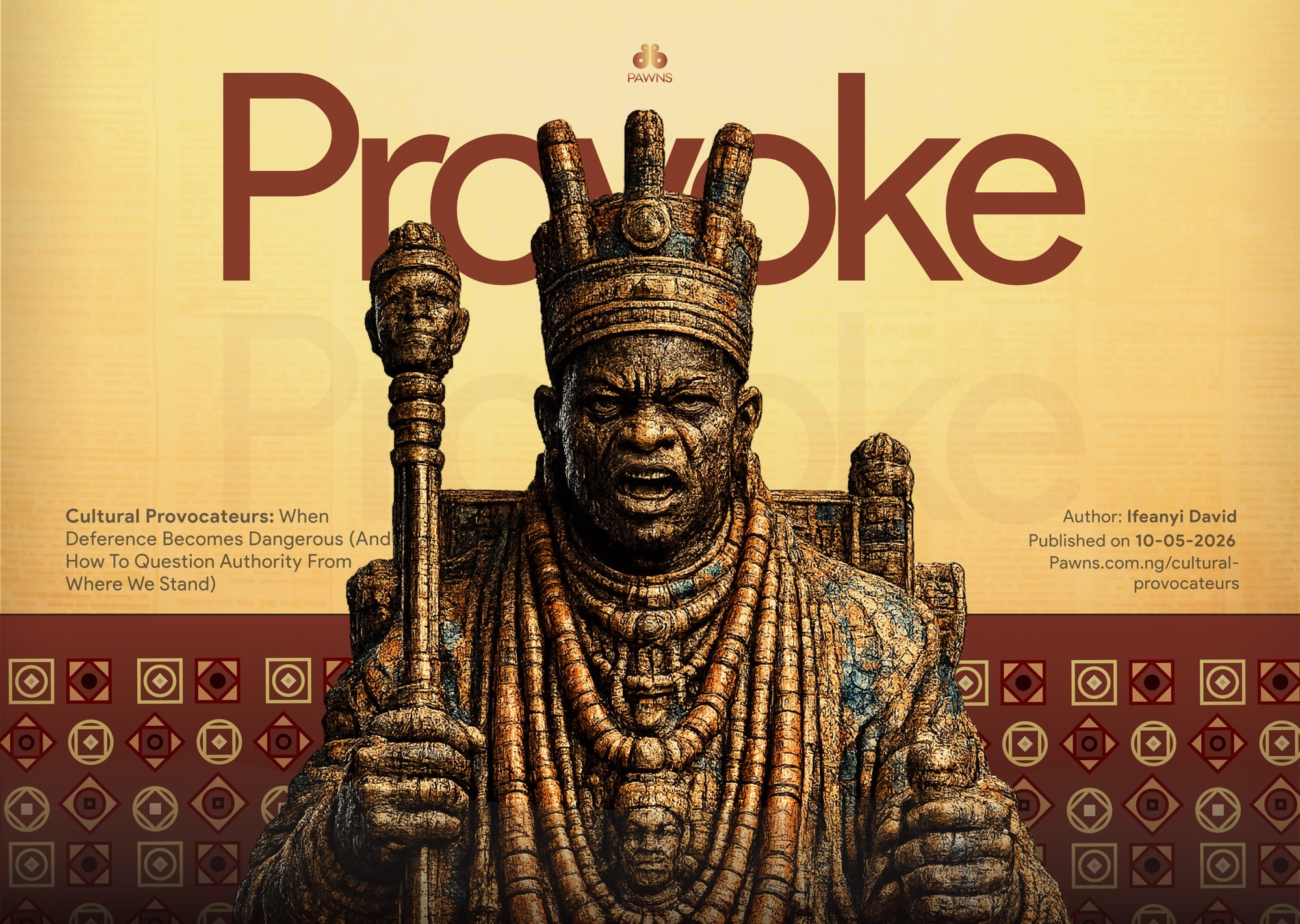
Fela Kuti called the Nigerian military a walking corpse in his song “Zombie.” Civilians loved it. But the people in power did not. So they sent those very servicemembers, marching forward and backwards, to deal with the young man who played the saxophone.
Fela was sought, eventually caught and severely beaten. On the other side of the raid, his mother was thrown from a window. Sustained injuries that would kill her months later. Their home, the iconic Kalakuta Republic, was burned to the ground. His studio, his instruments, and his master tapes were all destroyed.
He went back, however, to record “Yellow Fever/Na Poi” that same year, a critique of the colonial inferiority complex that makes us harm ourselves in pursuit of foreign ideals.
2026.
We have civilian rule. We have been voting since then. We have a constitution, at least on paper. But much of what Fela sang about still happens. Worse, many of us have become the soldiers he described. Marching forward. Marching backward. Refusing to question claims and instructions. Sometimes ready to tear apart anyone who dares challenge the way things are.
We do it online. We do it offline.
But a society that cannot speak against the wrong ideas of its elders will inherit their wrongs. And we have inherited plenty.
By elders, I mean parents, family heads, community and religious leaders, workplace superiors or politicians. Anyone placed above us by age, title, or proximity to power.
In many Nigerian contexts, questioning those above you is treated as disrespect, moral decay, or a threat to order. Those who dare are met with the familiar response:
“Who are you to speak?”
“What do you know?”
“You’re still young.”
“Shut up!”
Sometimes a slap does the trick. If not, a few months behind bars. In extreme cases, a missing-person poster.
This is not unique to Nigeria. Hierarchical societies across the world have used similar tools to preserve authority. What makes it dangerous is that the hierarchy has become more important than the truth, and defending the structure seems to matter more than our well-being.
No one is infallible. Authority does not erase mistakes. On the contrary, it magnifies them. A bad decision made by someone with no power may affect a handful. But, a bad decision made by someone with power affects a generation. And when that person cannot be questioned, the mistake becomes policy. Policy that eventually becomes the undoing of the people.
The Great Confusion
We have built our culture around “respecting” people simply because of who they are, not what they have done. But that is not true respect.
True respect is admiration earned through demonstrated merit. What we have standardised is deference: submission to another person’s judgment simply because they are older, richer, or hold a title.
It looks like this in practice… A boss makes a decision that will sink the department. The team sees the disaster but says nothing because “he is the oga.” The project eventually fails, as expected. As a result, the team members lose their jobs.
That is deference: it protects hierarchy and cares very little about protecting the truth and the well-being of members. Respect, on the other hand, would have allowed the team to speak. Or prompted the boss to listen. Altogether, it would have treated the success of the team as more important than the manager’s authority or ego.
Deference demands obedience. Respect invites communication.
Regrettably, the confusion between the two has cost us dearly.
The Danger of Deference
What makes unchecked authority dangerous is not just that it exists. It’s having people who should challenge the unscrupulous authoritarians instead fold their arms.
We see it happening right in front of our eyes.
Judges defend corrupt politicians because the thief shares their ethnicity or religion. Congregation members overlook a clergyman’s pedophilic behaviour because the scripture says “touch not my anointed.” Fans defend their favourite celebrity’s derogatory comment simply because they enjoy his/her music. Countrymen vote for an incompetent leader to spite another tribe and watch their own futures shrink in the process.
From those who justify the atrocities of bandits because they share a faith, to those who lynch homosexuals because their culture demands it, to those who masquerade sadism as tradition, errors and pain are preserved and intensified by those who refuse to question or challenge anything.
Many of us have been conditioned not to see the wrong in the people whom we hold in high esteem. We take their words as a foolproof way of life. Obey their instructions without a second thought. By the time we realise it, we’ve become the very people we’re championing, demanding the same unquestionable ‘respect’, repeating the same patterns, passing the same damage down.
Fear drives most of it. Fear of consequences. Fear of judgment. Fear of becoming a target. And that fear is not entirely irrational. But fear is also what perpetuates the circle.
The Cultural Provocateurs
Without structure, we lose what kept us whole. Our culture, at its best, has sustained us through colonialism and hardship. Elders who survived what we only heard or read about carry knowledge we still need. Some of what we inherited is worth keeping.
The question is how to honour it without making it untouchable.
As the Igbo say: “Ihe eji ejiji mma bu nkwado” — that is, “what makes a knife sharp is constant whetting”.
Cultural provocateurs are the whetstone. And like the whetstone, they challenge not to destroy but to sharpen. Scraping away rust. Exposing dull edges. Asking the uncomfortable questions that the majority would rather avoid. Every society that has moved forward has needed people willing to do this.
Voltaire wielded satire against the Catholic Church and absolute monarchy in 18th-century France, risking imprisonment to argue that no institution should be beyond criticism. Frederick Douglass used his voice and pen to expose the moral bankruptcy of a nation that claimed freedom while holding millions in chains. Wole Soyinka spent time in solitary confinement for opposing the military dictatorship and continued writing. Fela Kuti turned music into confrontation, and his commune became a living challenge to authoritarian rule.
The medium may change. The fight may change. But the heart remains the same: to prod the society awake before it sleepwalks off a cliff.
The Change From Within
Being a cultural provocateur is not a romantic appeal to martyrdom. Neither does it entail throwing ourselves before armed soldiers or risking imprisonment for ‘alleged’ comments on TikTok.
It is not an argument for anarchy.
For what it’s worth, it’s about using the position we already occupy to resist one lie, challenge one faulty assumption, and refuse one compromise that would make us unrecognisable to ourselves and create a vicious circle that will go on to hunt the next generation.
What we can do as cultural provocateurs looks different depending on where we stand.
In our art: Be a writer who tells stories that question our beliefs, not repeat them. Be the musician who writes songs that criticise bad leaders, not praise them.
In our professions: Be a teacher who encourages students to interrogate ideas, not just memorise them. Be the doctor who tells the truth, even when it exposes other doctors. Be the lawyer who defends the unpopular client because the law is supposed to apply equally.
In our relationships: Be the son who tells his father he is wrong at the dinner table. Be the friend who stops the conversation when lies are being passed around as truth. Be the family member who refuses to defend nonsense just because it came from someone we love.
Whatever platform we have, however small, use it to challenge one assumption, question one tradition, speak one uncomfortable truth.
Not as an act of nobility. But as an act of self-interest.
When we question the incompetent boss, we are protecting our own time from being wasted on terrible decisions and perhaps a toxic job. When we challenge a corrupt politician, we are protecting our wallets, our children, and our futures. Refusing to defend our uncle’s nonsense at the meeting is not stubbornness; rather, it is refusing to let outdated ideas colonise our minds.
The blade we sharpen cuts through the problems that would otherwise cut us.
But we should also be honest about the cost.
Speaking up in some contexts gets you fired. In others, it gets you killed. The teacher who challenges the curriculum might lose their job. The journalist who exposes corruption might disappear. The artist who critiques power might find their work banned.
Surely, this isn’t me calling for the same defiance that Fela Kuti carried so boldly. It’s quieter than that. More grounded. An invitation to lean into whatever margin of safety we have—and use it to nudge, question, or chip away at unhelpful ideas, because the margins are not equal.
The doctor with tenure can press a little further than the intern who is still finding their footing. The writer with an audience has more cover than the one just starting. The person with savings can pivot, test, and recover in ways the one living paycheck to paycheck simply cannot afford.
We use what we have. We push where we can. And we remember that small refusals, repeated across enough people, eventually become cultural shifts.
Conclusion: Start Sharpening The Blade
Fela made his choice with a saxophone. Wole Soyinka made his with a pen. Douglass made his with a printing press.
We can make ours wherever we already stand.
We may have inherited legions of mistakes from those above us. We do not have to pass them on. The choice to question, to challenge, and to act with courage is ours.
A society that cannot question its elders becomes a museum. And museums do not improve. They preserve. They archive. They display the past in glass cases and may call it heritage.
We are not artefacts. We are living people in a changing world. And if we want to survive what is coming, we need to start sharpening the blade.
***
Did you find this insightful? Please leave a thoughtful comment.
Below are some other pieces you might also like:
- African Renaissance: Why the Battle for a Better Africa Starts With Your Thinking
- Being Better: Religion, Atheism, and Why Both Sides Fall Into the Same Trap
- The Cuckoo Effect: How to Stop Nurturing Other People’s Dreams Instead of Your Own


David Ifeanyi is a mindful SEO content writer, photographer, and photo retoucher with over 3 years of experience.
His works help people value themselves and their experiences more. Over the years he has inspired countless people to embrace their uniqueness and become better versions of themselves.
David has worked with several brands, including Tobi Digitals, ReelCliq, and Black Aperture. And has been a huge player in the growth of Pawns Digital Agency.



“A society that cannot question its elders becomes a museum”
He was dropping punchlines back to back.
Thank you @David Ifeanyi. I can definitely feel your voice in this. There’s really something about tonality and it reflects in every way of communication, if one is genuine. I can tell the difference from @Dick David’s writing style. I love it!
He has a unique style of writing. It’s beautiful and refreshing to read anytime.
Thank you, guys.
Your words had me smiling.
Also, I’m happy, that the piece was worth your time.