
![Becoming a Polymath: Why the Most Distinctive People Are Simply the Most Fully Themselves And How You Can Be Too]](https://pawns.com.ng/wp-content/uploads/2026/04/becoming-a-polymath.jpg "Becoming a Polymath: Why the Most Distinctive People Are Simply the Most Fully Themselves [And How You Can Be Too] 1")


I enjoy playing chess. I also enjoy sharing life advice. So lately, I have been screen recording my chess games with voiceovers of me giving life advice — drawing inspiration from the game.
It is an intersection of my hobby, passion, and career as a writer. And I have been feeling very energised doing it. Though I don’t know if I will keep at it for the long haul. I once felt passionate about art, but today I hardly draw.
Anyway, the experience got me thinking about how we often showcase the parts of ourselves we think people would like, while ignoring, shrinking, or hiding the parts that truly excite us — because we fear they may not fancy it. A few years ago, chess was something I would not be so proud to record myself playing, not to mention giving life advice based on it. I would have worried about people thinking I suck at the game, my voice sounding annoying, and that I was wasting valuable time playing games.
But today, I have come to redefine each of those internal resistances, accepted them, and am now working with them. The chess videos are just one area of my life where embracing myself more fully has birthed something more unique. But this piece is not just about me. It is about what uncovering and combining different aspects of who we are can lead us to be — for ourselves, and for the world.
How Being Fully Yourself Is the Secret to Standing Out
Often, it is the courage of people to be their full selves — no matter how ridiculous, weird, or frustrating it gets — that has led to many of the amazing people and things we know and rely on today.
What these people share is not genius in the conventional sense. They are what some would call polymaths — people who draw from multiple disciplines, interests, and lived experiences to create something the world has no easy category for. Others call them multipotentialites: people who, rather than narrowing themselves into a single lane, deliberately cultivate range. History knew them as Renaissance men and women. Whatever the label, the pattern is the same.
Do you know Jimmy Carr? He is a renowned comedian. But he is the type of comedian who not only cracks ribs, but cracks beliefs. He not only gets laughter out of his audience, but he also gets applause, silence, and deep personal questions. People don’t just come to him for humour’s sake, but because he can handle the heaviest of matters with levity.
A 17-year-old once asked him, “How do I get a girlfriend?” And he basically gave the young man a crash course on approaching women — from good grooming and developing competence, to going out more and learning to be a friend first. He did all this while making the crowd laugh themselves to tears. At one point, he told the young man to resist watching porn, so he would be “crazy fucking horny” enough to “go up to a girl and face horrible, life-altering, ego-death rejection.”
Why is he able to do all that? Aren’t comedians supposed to be silly, goofy people who say unserious things we listen to when we are bored? Well, it might interest you to know that Jimmy completed a three-year course in Psychotherapy and is trained in Neuro-Linguistic Programming (NLP). In simple terms, he is qualified to be a therapist. What we see today is a weird intersection of his passions.
If you’re Nigerian, I am sure you know about Hilda Baci — the world-renowned chef who has won multiple Guinness World Records. At each moment, she was attempting a record; millions of Nigerians watched with pride as she prepared our local dishes on the world stage. It was glorious.
Hilda is famous for being a chef, yet very few people know just how unusual the person behind the achievement really is. Rather than a degree in Culinary Arts, she holds a degree in Sociology — which, when you think about it, makes complete sense. Her background helped her understand human behaviour and societal dynamics. Combine that with her experience as a professional actress and television host, and you have someone who can make something magical out of a passion for cooking. It was only by bringing different parts of herself together that she was able to mobilise millions of people, hold their attention for 100+ hours, and turn a kitchen task into a national moment of pride.
We could go on — from Steve Jobs combining experiences from Zen Buddhism and Calligraphy to create computers that are both beautiful and accessible, to Falz (Folarin Falana) drawing on his Law School background to create award-winning music and film that addresses serious societal issues without legally hanging himself — which has gotten others before him into serious trouble.
They don’t stick to one thing. But, they didn’t just dabble in everything thoughtlessly. They simply followed their full selves wherever that led, and built something at the intersection.
We may admire people because they are exceptional at what they do. But oftentimes, they only stand out because they are being themselves fully. We want to be like others when we ourselves are enough.
“You are looking for the miracle, unaware that you are the miracle looking.”
Why Most People Struggle to Be Themselves (And How to Break Free)
“What do you want to be when you grow up?” is a question we all get asked as kids. While it is not a bad question, it is misdirected — asked with the wrong expectations.
Why?
Because all any of us should have to be is ourselves, fully. Whether we end up flying an aeroplane, judging a case in a courtroom, or performing open heart surgery should be merely an offshoot — a product of our inclinations meeting the opportunities available to us at the time.
Within the past 10 years, I have been a Computer Engineering graduate, a graphite pencil artist, a house painter, a salesman, a mechanic, a graphics designer, a website designer, an author, a freelance content writer, a copywriter, a digital marketer, a public speaker, a babysitter, a decent cook, a coach, and more. Tomorrow, I might be something different.
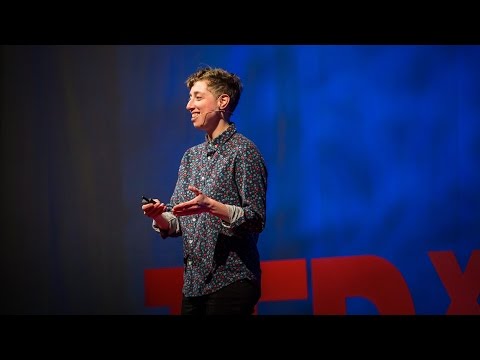
Video Details: Why Some of Us Don’t Have One True Calling | Emilie Wapnick | TED
Some would look at that list and see a lack of focus. I see a multipotentialite in progress — someone whose identity is not a single title but the sum of everything they have touched, tried, and carried forward. The world rewards specialists, but it remembers polymaths.
Who we are is simply the product of our inclinations interacting with our experiences as we move through life. At different points, we can be different things. So it makes sense that rather than chasing what we are told we should be, we first understand ourselves — then assess the opportunities around us, so we can combine inclinations and circumstances to be the best we can be at the time.
To do that, we first need to go inside.
Step 1: Discover What Makes You Unique (Finding Your Ikigai)
“Ikigai.” Ever heard the word? It is a Japanese concept that translates loosely to “reason for being” — what makes life feel worth living, the things that add joy to our existence.
A survey carried out in Japan by Sony Life Insurance Co. Ltd found that the average respondent listed 8 to 9 different sources of ikigai. The top ones included eating delicious food, travelling, visiting hot springs or spas, and listening to music. No mention of being a doctor, lawyer, or any lofty aspiration.
What does this tell us? That we don’t all value or enjoy the same things. What feels expansive to one person feels suffocating to another. Someone whose ikigai is aligned with travel may be thrilled as an Air Hostess but completely miserable as a banker. The issue would not be intelligence — it would be that a major source of their life is being quietly sapped.
My younger brother once joked that if I were thrown in prison but given a computer and an internet connection, I probably wouldn’t even notice I was being punished — because I stay indoors, all day on my computer, or just sitting alone thinking. So it shouldn’t surprise anyone that I feel miserable in crowded environments for long, and would make a terrible event planner.
We must ask ourselves: what is our ikigai?
Once we are clear on that, we are ready for the second step.
Step 2: Use Your Environment to Shape Who You Become
As much as we come with our own personalities and ikigais, we are also greatly shaped by our environment — not just the physical, but the social, economic, and even internal environments we find ourselves in.
Think of our environment like the maze in the Ms Pac-Man game. We are always inside one. There is no escaping it. Within it, we are always in motion, always consuming what is along our path — always seeing, feeling, hearing, and experiencing, even when we sleep.
Those experiences, like the pellets in the game, can be ordinary, good, or bad. The good ones energise us — they help us move faster, overcome challenges, and conquer our world. The bad ones debuff us: they slow us down, blind us to possibilities, and quietly limit what we can become.
Had I been born and raised in a small village in Rivers, Nigeria, I would most likely be a fisher or farmer. Had I grown up in a city like Surat, India, I might have become a master diamond cutter or been deeply versed in textile production. I need not elaborate, nor am I drawing comparisons between countries.
The point is simply this: we cannot separate who we become from where we come from. But we are not trees. We can change our environments. Beyond the obvious option of physical migration, we can also curate the ideas that occupy most of our mental space — by filtering the content we consume and the people we engage with.
This is how polymaths are made. Not in isolation, but through deliberate exposure — surrounding ourselves with the range of ideas, people, and experiences that feed the full breadth of who we are.
If our ikigai is pottery or ceramics and we happen to live in Nigeria, we might want to spend time in Ilorin, Abuja, or parts of Enugu, where earthenware is still part of the culture. We would want to seek out pottery videos on YouTube. Maybe even apply to study Fine and Applied Art at the University of Benin or the University of Nsukka.
With our ikigai and environment dialled in, the weird intersection is not something we engineer — it is something that naturally emerges. The real problem is that most of us don’t have the courage to let it.
Step 3: Make the Connection and Build a Distinctive Life
We have to become comfortable with being “weird” if we want to see the magic.
Consider my own situation. My ikigai centres mostly around thinking, teaching, writing, and making art. These are the activities that light me up. So I immerse myself in books, follow great thinkers online, and have — to a large extent — been able to earn from these things, which is a privilege and a commendable feat in itself. But on the few occasions I get into deep or serious conversations with people, they often remark, “You are not supposed to be in this country” — or, in a more condescending tone, “You need to go out more so you know what is happening.”
It can be strange and even scary to live in the intersections, because most times there are no established rules or maps for it, and people don’t even have a proper name for what we are doing. I remember going to do “Capturing” for my international passport. The ladies filling out my form asked what my profession was. I told them I was a freelance writer. They asked who my employer was. When I explained there was no employer, they chuckled and suggested I just say “Unemployed” or “Student.”
This is the tax that every multipotentialite, every Renaissance person, every polymath-in-progress pays. When our category is strange, people will impose a category on us. But we cannot let that define us. Because at the end of the day, the people who succeed in being their weird selves are the ones the categories eventually get named after — from Louis Braille, who invented the Braille system of reading for the blind, to Maria Montessori, whose method of teaching transformed how we think about children and learning.
It will first feel weird to us, and more so to others who haven’t even explored their ikigai, let alone gotten intentional about their environment or nurtured a unique intersection. But we have to learn to be comfortable with it — even without guarantees.
Conclusion: Be Willing To Be Weird
My friend, Ifeanyi David, always talks about how he wants to be a photojournalist. His face lights up whenever he talks about it. He says he doesn’t just want to take beautiful pictures. He is not interested in birthday shoots, wedding coverages, or professional headshots. In fact, he says he is not even interested in the money. He is interested in shedding light on the parts of society that are rarely seen — the ugly, shameful, scary, or plain unsettling parts. He is sentimental about such things. He is weird as is. But the truly weird intersection is that he is also obsessed with the stories behind those images. So to tell those stories, he has been honing his ability to write and design — devouring books and videos for years, surrounding himself with people exceptional in those areas, and practising daily. He says one day he hopes to combine it all to give the world something mindful and full of the human spirit. For someone living in Nigeria who doesn’t currently own a camera, that is truly bold, weird, and crazy uncertain.
I sometimes wonder if I am crazy for thinking this way — and even crazier for having friends who think the same way. But then I remember that everything we consider normal today was once unusual, until someone had the courage to fight for it. Prior to Rosa Parks, racism and segregation were normal — until she refused to give up her seat simply because she was Black. And like all the people highlighted in this piece, her bravery didn’t come from nowhere. She drew from her DNA, and her lived experiences — from grandparents who were enslaved and had to resist the Ku Klux Klan with guns, to higher education and specialised activist training.
Today, we are not being challenged to become therapeutic comedians, Guinness World Record-breaking chefs, or radical activists risking their lives. We are simply being asked to be ourselves. To look inward. Look around. Integrate what we find. And muster the courage to show up as we are, despite the weirdness.
The Renaissance men and women we admire didn’t set out to be polymaths. They set out to be themselves — fully, stubbornly, and without apology. That is all any of us are being asked to do.
I love Apple’s famous Think Different campaign — the one that started with “Here’s to the Crazy Ones” and ended with “Because the people who are crazy enough to think they can change the world are the ones who do.”
Maybe we don’t have to change the world.
Maybe we just have to change our lives.
But to do it, we might have to be crazy.
We might have to stay weird.
***
Did you find this insightful? Please leave a thoughtful comment.
Below are some other pieces you might also like:
- Uncovering Your Passions: 10 Ways To Discover Your Passions
- Ikigai; And What To Do When You Don’t Know What To Do In Your Life?
- Purpose Comes First: What to Do When Everything Feels Like a Waste of Time
- Purpose: The Most Important Thing You Can Do With Your Life.
- How To 100% Be Yourself

Dick David is a freelance SEO content writer and editor with over 7 years of experience in content writing, digital marketing, and sales. He is the founder of Pawns Digital Agency. Throughout his career, he has authored over 4 books, published hundreds of SEO articles attracting thousands of monthly visitors, ghostwritten numerous works, and edited hundreds of content pieces across various industries. Currently, he works with Robert Taylor Media and has also worked with Tobi Digitals and Branditechture Design Agency, among others.